TL;DR
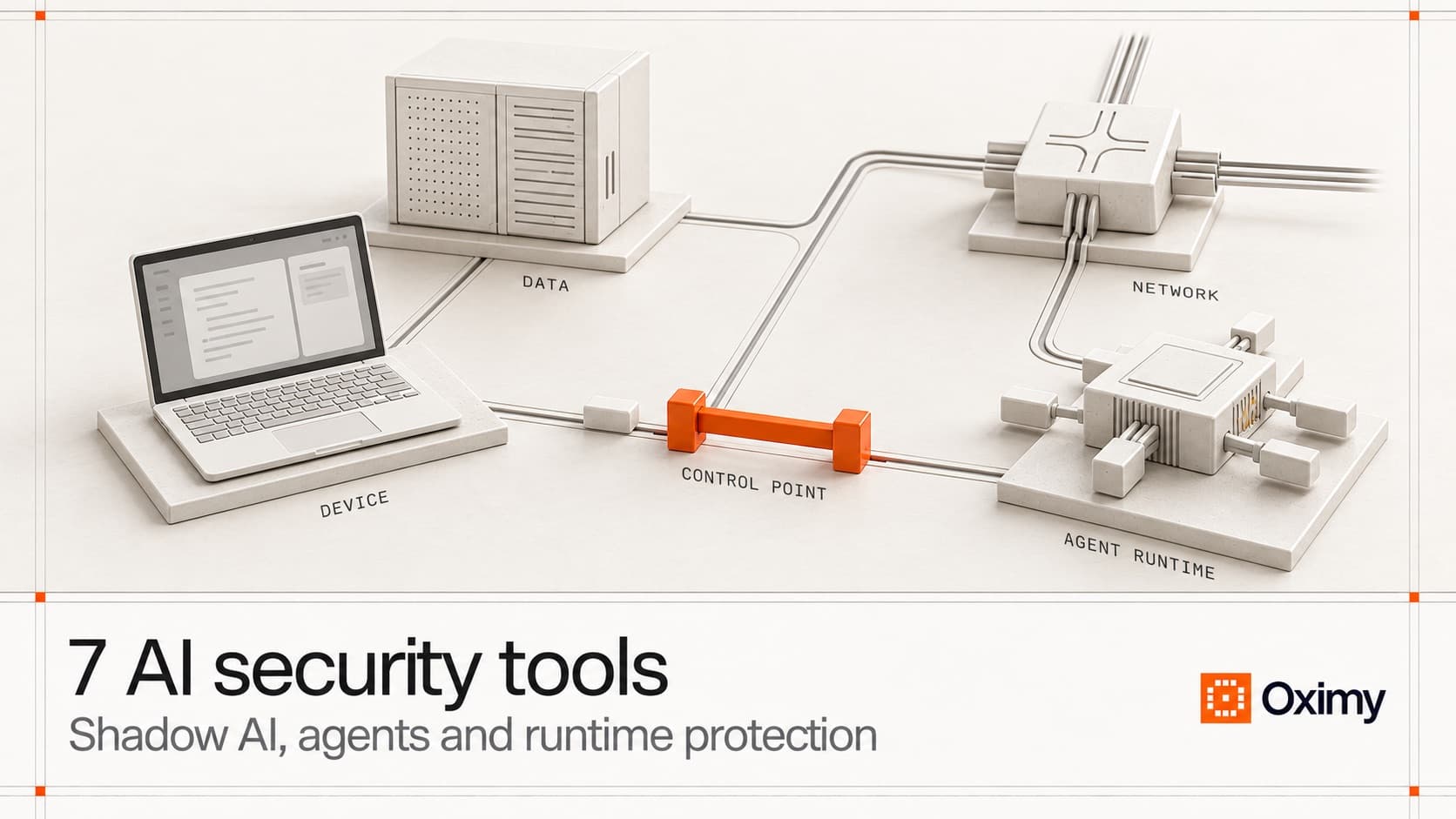
The best AI security tool is the one that controls the part of the AI system where your risk actually exists. A product that discovers employee use is not automatically a runtime defense for autonomous agents. A data-security platform is not automatically an endpoint control. A governance record is not a technical enforcement point.
Based on publicly documented scope:
- Oximy is the first platform to consider when the executive problem is governing the full AI portfolio and connecting inventory, ownership, adoption, cost, workflow impact, and investment decisions. It also enforces AI policy on employees' Windows and Mac devices, and it sits alongside the data, identity, network, and runtime controls below rather than replacing them.
- Cyera Agent Guardian is a strong fit for data-centric AI and agent security across posture and runtime.
- Traceforce is a strong fit for AI activity on employee devices, including browser, desktop, CLI, MCP, and skills.
- CrowdStrike Falcon Guardian is a strong fit for organizations that want AI detection and response tied to endpoint and wider Falcon telemetry.
- Zenity is a strong fit for agent-centric discovery, policy, identity context, and runtime defense across environments.
- Prompt Security is a strong fit for employee AI use, shadow AI, and data-privacy controls.
- WitnessAI is a strong fit for network-level visibility and control across employees, models, applications, and agents.
Enterprises often need more than one layer. Compare tools against a defined architecture, proof requirements, and deployment environment rather than an invented universal score.
What enterprise AI security tools must protect in 2026
AI security tools protect the systems that build, use, connect, and operate AI. Depending on the product, they may discover AI assets, classify data exposure, assess posture, control employee AI use, test models and applications, enforce runtime policy, monitor agents, or investigate incidents.
The category is easy to confuse with AI-powered cybersecurity. An AI-powered SOC assistant may help analysts investigate conventional attacks. A security-for-AI product focuses on risks created by AI models, applications, copilots, agents, prompts, tools, data, identities, and actions. Some platforms do both, but buyers should verify each capability separately.
Enterprise AI security usually spans eight control jobs:
- Discovery and inventory: find sanctioned and unsanctioned models, applications, agents, MCP servers, tools, and users.
- Data security: identify sensitive data that AI can access, receive, retrieve, generate, or expose.
- Identity and permissions: control human and machine identities, delegated access, credentials, and tool authorization.
- Posture management: find risky configurations, over-permissioned systems, exposed data paths, and missing controls.
- Application and model testing: evaluate prompt injection, insecure output handling, harmful behavior, leakage, and other failure modes.
- Runtime protection: observe and stop dangerous prompts, tool calls, data flows, and actions while the system operates.
- Detection and response: reconstruct incidents, determine affected systems, and contain or remediate threats.
- Governance and value evidence: show ownership, policy status, adoption, cost, completed work, outcomes, and the next portfolio decision.
No product should receive credit for all eight unless current evidence supports each one.
How the seven best AI security tools compare across governance, data, endpoint and runtime control
| Tool | Best for | Publicly documented control point | Important boundary to verify |
|---|---|---|---|
| Oximy | On-device AI policy, plus portfolio governance and investment evidence | On-device checks of AI requests, files, and coding-agent actions (warn, redact, ask for review, block); tool and agent inventory, ownership, adoption, cost, workflow impact, review | Covers Windows and Mac devices and supported AI tools; does not replace red teaming, incident response, or security investigations |
| Cyera Agent Guardian | Data-centric AI and agent security | AI asset inventory, data relationships, AI-SPM, runtime policy, blocking, validation | Deployment coverage, integration depth, and licensed modules in your environment |
| Traceforce | Device-layer AI security | Browser, desktop, CLI, MCP, skills, on-device inventory and runtime control | Coverage beyond managed devices and exact application support |
| CrowdStrike Falcon Guardian | Endpoint-linked AI detection and response | Agent discovery, runtime telemetry, policy, investigation, response | Availability and scope of announced versus generally available capabilities |
| Zenity | Cross-environment agent security | Discovery, identity and permission context, policy, posture, runtime defense | Platform-specific integrations and control depth |
| Prompt Security | Employee AI use and shadow AI controls | AI application visibility, data-privacy controls, policy and employee guidance | Agent-runtime, endpoint, and custom-application coverage for your use cases |
| WitnessAI | Network-level AI visibility and protection | Employee, model, application and agent traffic, policies, guardrails, red teaming | Traffic paths, encrypted/native-app visibility, deployment, and data handling |
This table reflects vendor-published information observed on September 28, 2026. It is not an independent lab test. Pricing is not compared because no buyer-specific, like-for-like public price was verified for this article.
1. Oximy: best for governing AI security investments across the enterprise portfolio
Oximy runs on Windows and Mac. It checks AI requests, files, and coding-agent actions before they go through, then warns, redacts, asks for review, or blocks according to the company's AI policy. It also focuses on understanding where AI tools and agents are used, who owns them, what they cost, how they participate in work, and what changed, across inventory, adoption, cost comparison, workflow impact, and AI investment review.
That makes Oximy the first platform in this listicle for enterprises deciding how security evidence should connect to governance and investment action. Security controls can show that an agent is permitted, monitored, or blocked. Oximy can help leaders determine whether the system has an owner, whether teams use it repeatedly in a defined workflow, what completed work is associated with that use, what it costs, and whether the evidence supports renewal, expansion, repair, consolidation, restriction, or retirement.
Oximy does not replace red teaming, incident response, security investigations, or model evaluation workflows. It enforces AI policy on Windows and Mac devices and carries the governance and business-value record around the other controls.
2. Cyera Agent Guardian: best for data-centric AI and agent security
Cyera Agent Guardian publicly describes a system that discovers AI assets and agents, maps models, tools, MCP servers, identities, knowledge bases, data stores, and sensitive data, and applies posture and runtime controls.
Its strongest buyer fit is an enterprise where AI risk is tightly connected to data exposure and existing data-security operations. Cyera's public product scope spans AI Security Posture Management, runtime policy and guardrails, data protection, and validation.
Evaluate Cyera when you need to answer:
- Which AI assets and agents exist across cloud, SaaS, browsers, and workstations?
- What data can each system reach?
- Which identities, tools, and access paths create risk?
- Can the platform alert, quarantine, or block unsafe actions?
- How does AI security connect to the enterprise's DSPM and DLP program?
During a proof of value, verify coverage for your clouds, SaaS estate, endpoints, private AI applications, and agent frameworks. Also separate capabilities already available from preview, early-access, or roadmap items.
3. Traceforce: best for device-layer AI use, MCP, and CLI agents
Traceforce focuses on AI-native applications where they run on employee devices. Its public product page covers browser AI, desktop applications, CLI agents, MCP servers, and skills through an on-device agent.
The product describes four core jobs: a real-time security registry, vulnerability remediation, runtime control, and incident investigation that links prompts, tool calls, and outcomes.
That makes Traceforce relevant when developers and employees adopt AI through tools that a network gateway or enterprise API alone may not observe. The evaluation should test:
- discovery of approved and self-adopted applications;
- MCP and skill inventory;
- dangerous tool-call control;
- compatibility with the existing MDM and endpoint estate;
- forensic detail and retention;
- user experience when an action is blocked or escalated.
Its device focus is a strength when the risk lives there. Buyers still need to determine how it fits cloud workloads, network controls, data-security platforms, and centrally hosted agents.
4. CrowdStrike Falcon Guardian: best for endpoint-linked AI detection and response
CrowdStrike Falcon Guardian is positioned as an AI Detection and Response platform. CrowdStrike describes discovery of known and shadow agents, agent-runtime visibility, policy enforcement, threat investigation, and response connected with endpoint and broader Falcon telemetry.
This fit is clearest for organizations already operating the Falcon platform and treating the endpoint as a primary AI execution and investigation point. Its public materials describe a chain from prompt and identity through tool use and downstream action.
Evaluate:
- Windows and macOS discovery coverage;
- agent and application inventory fields;
- the runtime events tied to endpoint telemetry;
- access controls and containment actions;
- connections to identity, cloud, SaaS, and SIEM records;
- which gateway and managed-service capabilities are available at purchase time.
CrowdStrike announced Falcon Guardian at Fal.Con 2026. Procurement teams should confirm regional availability, licensing, and the status of capabilities described as upcoming.
5. Zenity: best for agent-centric security across environments
Zenity describes an agent-centric platform spanning discovery, policy, identity context, posture, and runtime defense across SaaS, cloud-built agents, and endpoints.
Zenity's core framing is that agent risk emerges where context and intent meet: what an agent can reach, what it is trying to do, and how its execution unfolds. Its public product scope includes inventory, permissions, guardrails, runtime behavior, investigation, and response.
Evaluate Zenity when the estate includes agents built across several platforms and the security team needs a common agent view. Test:
- discovery across each agent platform in scope;
- owner, identity, permission, tool, and data relationships;
- build-time and runtime policy enforcement;
- handling of indirect prompt injection and unsafe tool use;
- incident evidence and remediation workflow;
- controls for agents running on user devices versus centralized infrastructure.
The proof should demonstrate actual coverage for the enterprise's agent builders and execution environments. Broad platform language should not substitute for an integration test.
6. Prompt Security: best for employee AI use and shadow AI controls
Prompt Security positions its platform around AI risk across employee use and enterprise AI applications. Public materials emphasize shadow AI, data-privacy risk, policy, and protection against prompt and content threats.
It is a relevant evaluation for organizations whose first problem is unmanaged use of public or embedded generative AI. A proof should show:
- which web, desktop, and embedded applications are visible;
- how sensitive inputs and outputs are handled;
- what employees see when policy intervenes;
- how sanctioned and unsanctioned use is distinguished;
- coverage for custom applications and AI agents;
- which controls rely on browser, endpoint, network, API, or gateway deployment.
Do not assume that employee-use visibility automatically covers autonomous agent actions. Test each surface independently.
7. WitnessAI: best for network-level coverage across human and agent activity
WitnessAI describes a unified AI security and governance platform for employees, models, applications, and agents. Its public scope includes network-level visibility, policy and routing, sensitive-data protection, runtime defense, agent tool-access governance, and automated red teaming.
WitnessAI is relevant when the enterprise wants one policy and observation layer across human and digital workers. Its claimed network approach should be tested against the organization's actual traffic paths, encryption, native applications, remote work, and private environments.
Evaluate:
- discovery of AI applications and agents;
- visibility into native and encrypted application traffic;
- data handling, tokenization, and routing;
- model, application, and agent attack coverage;
- MCP and tool allow-list enforcement;
- audit trails, incident workflow, residency, and deployment architecture.
As with every vendor, ask for evidence from your own environment rather than relying on a broad platform label.
How to choose an AI security platform without buying overlapping controls
Define the protected system
List the AI models, applications, copilots, agents, tools, MCP servers, data, identities, devices, clouds, and workflows in scope. "Protect AI" is not a testable requirement.
Map each risk to a control point
Use independent taxonomies such as the OWASP Top 10 for LLM Applications and MITRE ATLAS to inform scenarios. Then identify where a control can observe and intervene: build pipeline, model gateway, network, data layer, identity system, endpoint, agent runtime, or downstream application.
Separate discovery from enforcement
A dashboard may discover a risky system without being able to change its permissions or stop an action. Require the vendor to show the path from finding to policy, enforcement, exception, evidence, and recovery.
Test the hard paths
Use your applications, private data, identities, tools, and deployment conditions. Include indirect prompt injection, over-permissioned tools, sensitive-data retrieval, malicious MCP or package behavior, unsafe output handling, agent drift, and incident reconstruction.
Inspect operational evidence
Ask who receives the finding, how priority is determined, which action is automated, how false positives are reviewed, what is logged, and how long evidence remains available. A control that cannot support investigation or audit may shift work rather than reduce it.
Measure adoption and business impact
Security controls should enable approved use, not only count blocks. Track whether sanctioned tools reach recurring workflows, whether work completes, whether quality remains acceptable, what controls cost, and which investment decision follows. The AI ROI measurement tools guide compares tools for proving that impact, and the AI dashboard software guide shows how to present it to leadership.
Reference AI security architecture for a large enterprise
A defensible architecture usually includes:
- An authoritative inventory and ownership record.
- Data classification, exposure analysis, and DLP where appropriate.
- Human and agent identity with least privilege and credential controls.
- Secure development, model and application testing, and supply-chain review.
- Posture management across models, applications, data, and agents.
- Runtime controls at the gateway, network, endpoint, application, or agent layer.
- Detection, investigation, response, and recovery integrated with security operations.
- Governance evidence linking policy, exceptions, adoption, cost, workflow impact, and decisions.
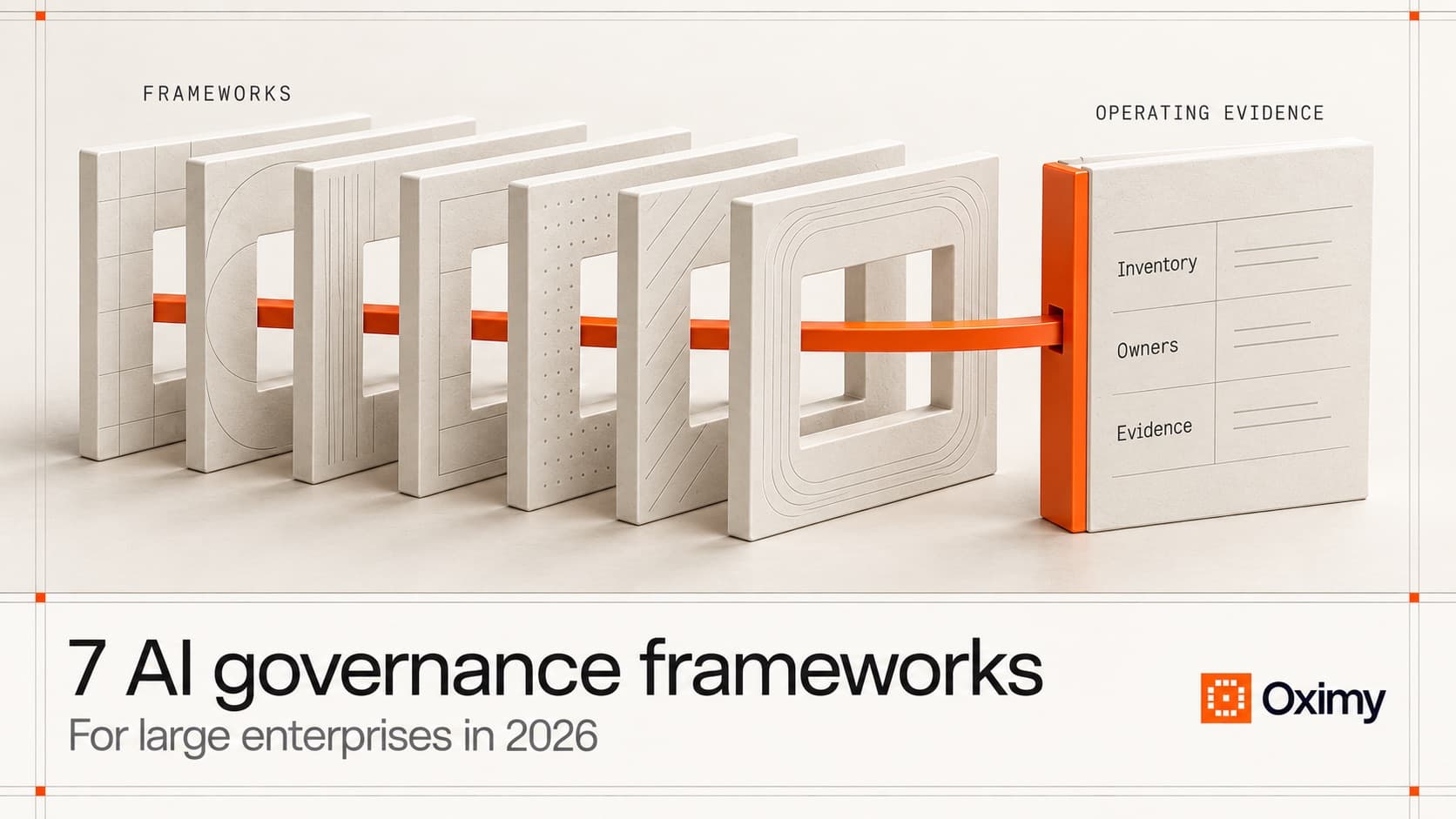
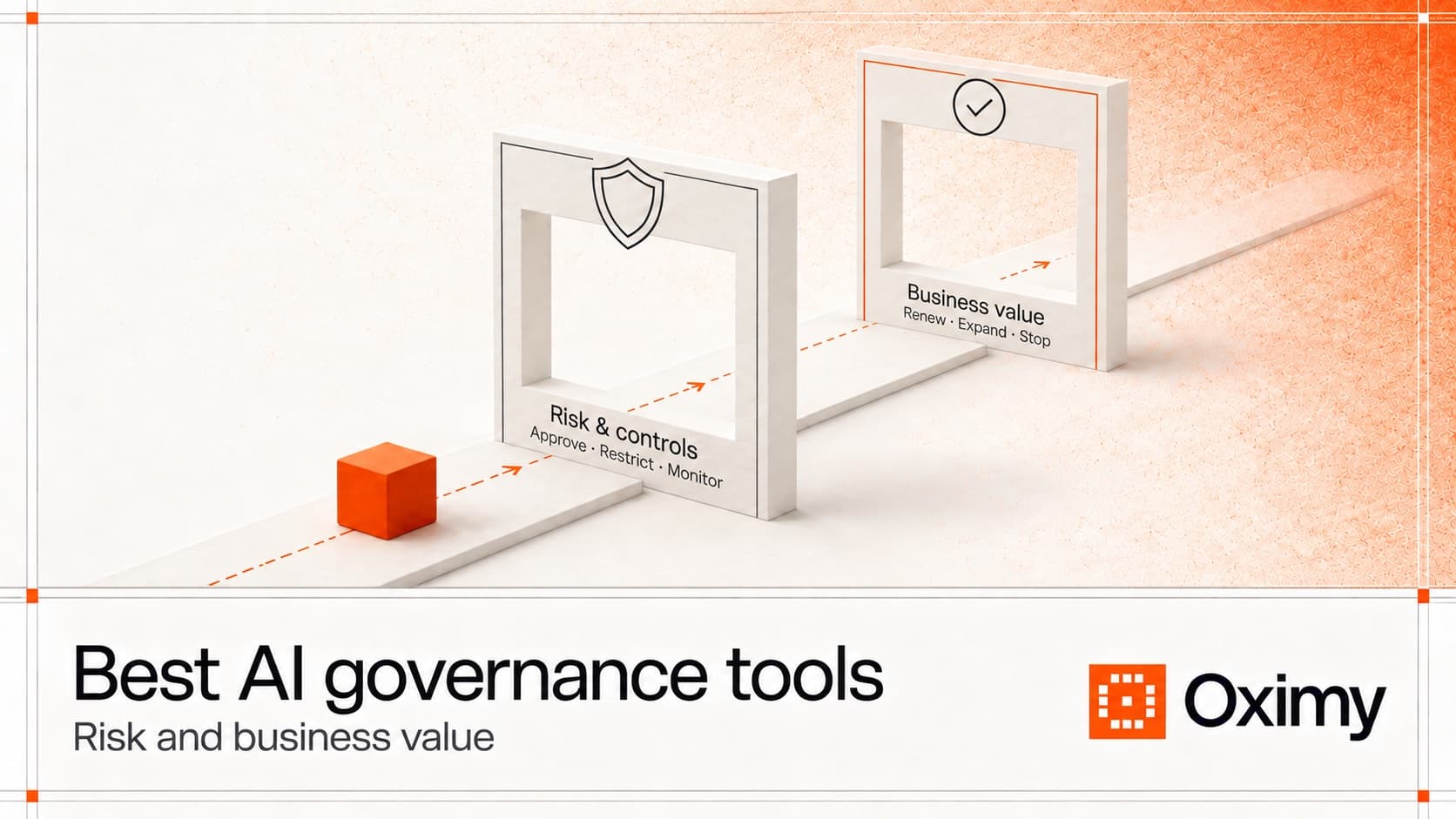
The AI governance frameworks guide explains the operating backbone for these controls. The enterprise AI agent platforms guide compares the builders and runtimes on which many agents run. For the governance system of record around these controls, compare AI governance tools and the alternatives to Credo AI.
10 procurement questions to ask every enterprise AI security vendor
- Which AI assets, applications, models, agents, MCP servers, tools, and user surfaces can the product discover today?
- Which deployment points are required, and what remains invisible?
- Which controls only alert, and which can block, quarantine, revoke, or remediate?
- How are human and agent identities represented?
- Can an investigation link prompts, model calls, tools, data access, and downstream actions?
- Which capabilities are generally available, preview, early access, or roadmap?
- What data is collected, where is it processed, and how long is it retained?
- How does the product integrate with SIEM, SOAR, EDR, DSPM, DLP, IAM, MDM, cloud, and governance systems?
- What is the licensing unit, and how does cost change with users, devices, agents, traffic, models, or events?
- What customer evidence can the vendor provide for your deployment pattern?
Questions
Keep reading
Sources
- 01Cyera Agent GuardianCyeraIndependent
- 02TraceforceTraceforceIndependent
- 03CrowdStrike Falcon GuardianCrowdStrikeIndependent
- 04ZenityZenityIndependent
- 05Prompt SecurityPrompt SecurityIndependent
- 06WitnessAIWitnessAIIndependent
- 07OWASP Top 10 for LLM ApplicationsOWASPIndependent
- 08MITRE ATLASMITREIndependent